
SiteHeros Editorial · AI-assisted guide · 4 min read
The best starting point for a useful article is a real decision your customer is trying to make. Answer it clearly, make it practical and offer a relevant next step.
Start with the questions that already matter
Your customers are already giving you content ideas. They ask what a service includes, how the process works, what they should prepare and how to choose between options. Each question points to a moment where useful information could help somebody move forward.
Collect those questions from conversations your team is authorized to review. Remove identifying details and look for themes. A question that appears repeatedly deserves attention, especially when answering it would help a prospective customer make a more confident decision.
Choose one reader and one decision for each article. “What should I prepare before a website project?” is easier to answer well than “Everything about business growth.” A focused question gives the article a clear job and helps the reader recognize its value.
Give the reader something they can use
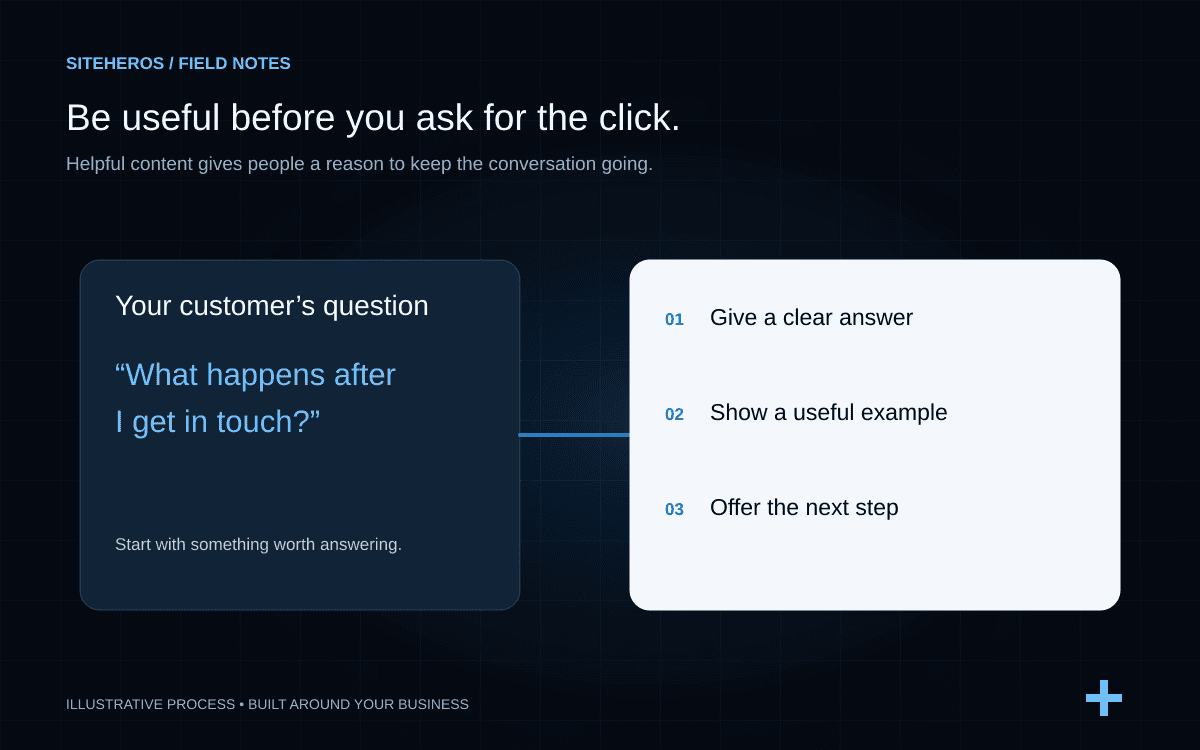
Answer the central question early. Then explain the reasoning, show a practical example and give the reader a way to apply it. A useful article might include a short checklist, a comparison of considerations or a sequence of steps.
For example, an onboarding article could explain which information belongs in the initial inquiry and which belongs in the later client brief. A clearly labeled illustrative example helps the reader picture the difference without pretending to be a client case study.
Google’s people-first content guidance emphasizes material that is useful to its intended audience and provides substantive value. Use that as an editorial test: after reading, can someone make a better decision or take a clearer action?
- Replace broad advice with specific questions to ask.
- Explain unfamiliar terms in everyday language.
- Use evidence where a factual claim needs support.
- Keep examples relevant to the reader’s situation.
- Remove paragraphs that repeat the same point.
Make the idea easy to read, save and share
A clear title tells someone what they will learn. A short introduction explains why it matters. Descriptive headings help busy readers find the part they need, while a meaningful image can make the process easier to understand.
Design the social preview around the same promise. Use a title and description that match the article, supported by an image that explains the topic. When the reader arrives, deliver what the preview led them to expect.
Think about the person who receives the shared link as well as the person who shares it. They may know nothing about your company. The article should stand on its own, define the problem and make its examples understandable without requiring another page first.
Offer the next step that fits the question
The commercial connection works best when it continues the reader’s thought. Someone learning about inquiry handling may want to see how a workflow is structured. Someone planning ongoing care may want to understand a management plan.
Put that next step near the point where it becomes useful, and explain why it belongs there. “Explore the workflow behind a clearer client handoff” gives more context than a generic sales prompt repeated after every paragraph.
Keep the distinction between education and service scope clear through specific positive language. Explain the capabilities relevant to the article, then let the service page show the current options and details. This keeps the article helpful as the reader moves from understanding the problem to considering implementation.
Build a small library that keeps earning its place
Start with a few strong answers rather than a long publishing list. Connect related articles with useful links, and revisit pages when your services, processes or customer questions change.
A practical review asks whether the advice is still accurate, the links still work, the example still fits and the next step still leads to the right destination. Keep original publication dates authentic and use an accurate updated date when the publishing system supports it.
SiteHeros brings the website, inquiry experience and ongoing management into the same picture. Elite Management can support the technical foundation and agreed content changes within the selected plan’s requested-work allowance. A focused content plan then gives that foundation something useful to carry: clear answers that help the right customers start a conversation.
For your next article, choose one question your team answered this week. Write the answer in plain language, add one useful example and finish with a next step that genuinely helps. That is a strong place to begin.