
SiteHeros Editorial · AI-assisted guide · 3 min read
A strong onboarding process answers three questions for every new client: what do you need from me, what happens next and who is taking care of it?
Make the first yes feel like progress
A new client has made a decision. They are ready to move forward, and the next few interactions tell them what working with your business will feel like. A thoughtful onboarding process turns that momentum into a clear start: the right information is collected, the next task has an owner and the client knows what to expect.
Start by writing down the moment that begins onboarding. For one business, it is an approved proposal. For another, it is a confirmed booking or completed agreement. A shared starting point helps the team use the same process instead of creating a different version for every new client.
Then describe the outcome. “Client has completed the brief, the team has reviewed it and the next step is confirmed” is useful because everybody can recognize when it has happened. That is a stronger foundation than a collection of welcome emails with no clear finish.
Ask the right questions at the right stage
The first inquiry and the onboarding brief have different jobs. The inquiry helps you understand whether there is a useful conversation to have. The brief collects the detail needed to begin the agreed work.
Give every onboarding question a reason. Ask for information that affects delivery, approval or coordination. A service business might need a primary contact, project priorities, available materials and the person who will approve the work. Explain unfamiliar questions so the client can answer confidently.
- Needed to begin: collect it before the first delivery step.
- Useful but optional: label it clearly and keep the process moving.
- Needed later: ask when the context makes it easier to answer.
W3C’s forms guidance supports asking only for information needed for the process. Apply that thinking to a client brief: make the form useful to your team and understandable to the person completing it.
Give each handoff a visible owner
A completed brief is valuable when someone can act on it. Define who reviews it, what they check and how they record the next action. Keep the status language simple enough that another team member can understand it without an explanation.
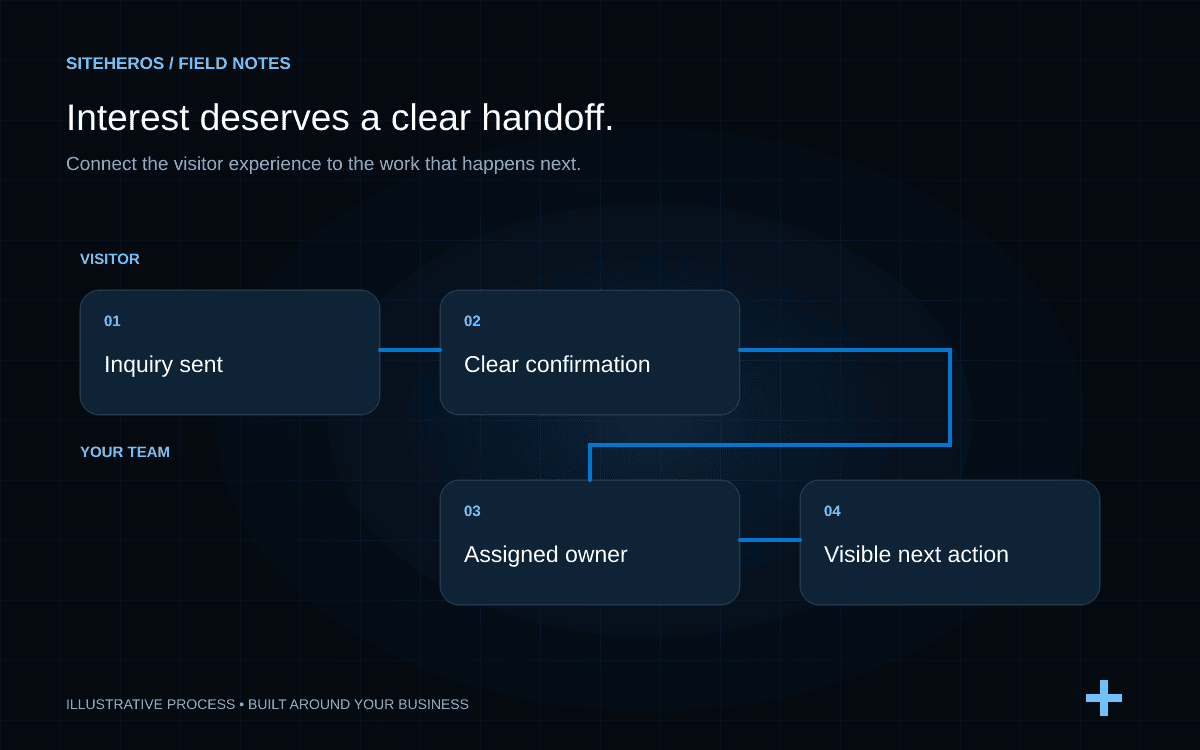
For example, an illustrative onboarding path might use “Brief requested,” “Brief received,” “Ready for review” and “Next step confirmed.” Choose stages that reflect your actual work. Each stage should tell the team something meaningful, rather than merely indicate that a message was sent.
Also decide what happens when information is incomplete. Assign the question to a person, record what is missing and make the follow-up visible. A clear exception path helps a busy team handle real-world responses without losing the overall picture.
Tell the client what happens after they submit
The confirmation screen is part of the experience. Thank the client, make it clear that their brief was submitted and explain the next step in plain language. Use a response expectation your team can genuinely support.
Keep the message specific to the stage. “Your brief has been received. Our team will review it and confirm the next step” is useful when that describes the real process. If the client needs to supply files or choose a time, make that action easy to identify.
Test the confirmation as carefully as the questions. On a phone, can someone read the labels, correct a mistake and understand the result? Internally, can the reviewer find the brief and see what should happen next?
Connect onboarding to the business around it
The most useful onboarding process feels like a continuation of the website and sales conversation. The service description, inquiry, brief and team handoff should use consistent language and reflect the same expectations.
SiteHeros builds that connection into its workflow approach. Elite Management Growth, Growth+ and Scale include an onboarding workflow within their agreed scope, alongside the inquiry workflow. Monthly end-to-end testing covers included workflows and entry forms, helping the business check the journey as a connected process.
Start your own review with one recently completed onboarding. List every question the client asked, every item the team chased and every unclear handoff. Choose one improvement that would make the next client’s start feel easier. A better process begins with that kind of specific, useful change.